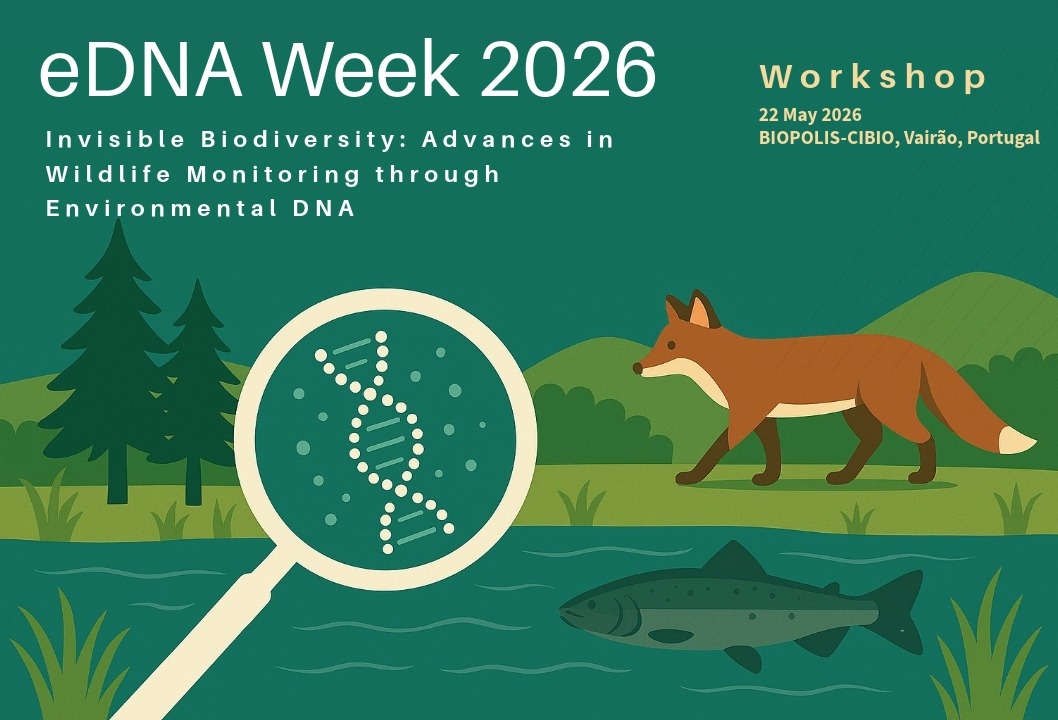
The BIOPOLIS/CIBIO eDNA Week 2026 features a workshop comprising a series of lectures delivered by international experts on environmental DNA (eDNA) for wildlife monitoring. The workshop is intended for students* and researchers within the BIOPOLIS/CIBIO community.
Participation is free of charge, but registration is mandatory as seats are limited. Register here: https://forms.gle/3Ggz3AzfmBrPWjf1A
Audience: Course participants, CIBIO researchers, invited stakeholders
*Priority will be given to students enrolled in the eDNA course and to BIODIV students.
PROGRAM
Morning
09:45 Introduction (Manuel Lopes-Lima / Pedro Beja)
10:15 Vincent Prié – Applied eDNA for Cross-Taxa Biodiversity Inventories: Case Studies from Megadiverse Ecosystems (Spygen, France)
10:45 Coffee break
11:15 Arnaud Lyet – A Decade of eDNA for conservation: What practitioners taught us about what works, what’s missing, and what comes next (WWF, USA)
11:45 José Andrés – Innovative eDNA high-throughput approaches (Cornell University, USA)
12:15 Loïc Pellissier – Scaling eDNA from local monitoring to global ecosystems assessment (ETH Zurich, Switzerland)
Afternoon
14:00 Robin Naidoo – Portable shotgun sequencing of environmental DNA samples for biodiversity inference (WWF, Washington, USA)
14:30 Manuel Curto – Exploring eDNA metagenomics to uncover diversity across the tree of life (CIBIO / BOKU)
15:00 Cody Aylward – Portable population genomics: Non-invasive assessment of elephant connectivity in the Kavango-Zambezi region using MinION sequencing (WWF, Washington, USA)
15:30 Coffee break
15:45–16:30 Round Table: The future of eDNA in biodiversity policy, monitoring and research
16:30–18:00 Networking mixer/cocktail
SPEAKERS
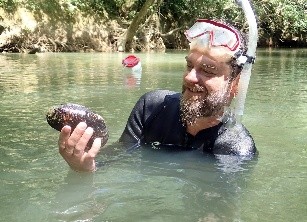 |
Vincent Prié is a hydrobiologist and malacologist specializing in the taxonomy, genetics, and conservation of freshwater molluscs, with a particular focus on bivalves. He holds a PhD from the Muséum national d'Histoire naturelle de Paris (2013) and is the author of the reference book Naïades et autres bivalves d'eau douce de France (Biotope/MNHN, 2017). He currently works at SPYGEN, a leading environmental DNA laboratory, where he develops and deploys eDNA-based detection methods for freshwater bivalve monitoring in France and abroad, with a growing focus on African rivers. His work bridges fundamental taxonomy, applied conservation, and molecular biodiversity tools. Biological surveys in megadiverse tropical environments are notoriously difficult, particularly for invertebrates, which represent the bulk of biodiversity. Yet given the unprecedented pace of biodiversity loss worldwide, we urgently need tools that are efficient, cost-effective, rapid, standardisable, and capable of detecting virtually any taxon across the tree of life. Environmental DNA (eDNA) metabarcoding bears such a promise. By capturing genetic material shed by organisms directly from environmental samples, it bypasses the need for direct observation or collection, making large-scale inventories feasible even in remote or logistically challenging settings. Here he will present results from large-scale eDNA biodiversity surveys conducted in Central Africa and French Guiana, combining broad-spectrum primer sets designed to cover the whole tree of life with more targeted primers for specific taxonomic groups. I will highlight some usually overlooked taxa and show what eDNA can reveal about their diversity, distribution, and sensitivity to human activities. He will also show how the lack of reference databases can be bypassed, and how eDNA can unveil undescribed species. These results illustrate both the power and the current limitations of eDNA-based approaches, and open perspectives for extending such surveys to other biodiversity hotspots. |
 |
| Arnaud Lyet is the director of biodiversity monitoring at WWF on the Wildlife Conservation team. He specializes in animal population monitoring, modeling, and decision science and has extensive hands-on experience leading complex biodiversity monitoring programs at regional and global scales. He is recognized for bringing creative technologies, including artificial intelligence and environmental DNA, into practical conservation use. During his time at WWF, Arnaud has developed, tested, and taught innovative statistical methods and field approaches designed to tackle conservation challenges in a timely and cost-efficient manner. Among other work, he spearheaded WWF's research program on eDNA monitoring of terrestrial mammals across some of the world's most logistically demanding environments, including the search for the critically endangered Sumatran rhino in Borneo and Sumatra. He has played an active role in building two global biodiversity monitoring initiatives: WildinSync, an eDNA monitoring program developed in partnership with ETH Zürich, and Wildlife Insights, an AI-powered platform for camera trap image analysis. He is also a member of the IUCN Species Monitoring Specialist Group. Environmental DNA has rapidly matured from a promising laboratory technique into a field-deployable tool reshaping how conservation organizations monitor biodiversity at scale. This talk traces WWF's decade-long eDNA journey, from early proof-of-concept work detecting giant Mekong catfish and genotyping polar bears from DNA collected in their snow prints, to landmark multi-species deployments in Madre de Dios, British Columbia, Bhutan, or Namibia. Drawing on field programs across four continents, we explore what working with practitioners genuinely taught us: where eDNA delivers reliable, decision-grade data, where it still disappoints, and where the most consequential gaps lie. The journey also produced some genuinely unexpected encounters species and findings that no one had planned for, and a few that gently complicated the picture we thought we already had. The talk then turns to what comes next: a practitioner's wish from robotic sampling to abundance estimation. Finally, we highlight the technical, institutional, and cultural barriers that still stand in the way. |
 |
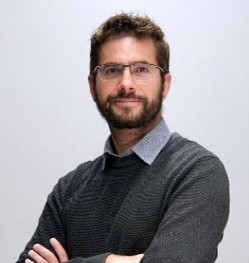
| José A. Andrés is an Atkinson Faculty Fellow at Cornell University and Director of the Environmental DNA and Genomics Core Facility. He holds a Ph.D. in Biology from the Universidad de Vigo and has held academic positions in Europe and North America. His research integrates genomics and ecological tools to understand biodiversity patterns and processes, informing conservation and wildlife management. |
 |
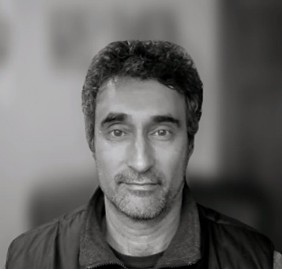
| Loïc Pellissier is a Professor at ETH Zurich. Environmental DNA (eDNA) metabarcoding provides a cost-efficient and scalable way to monitor biodiversity by capturing species signals integrated across landscapes, with studies demonstrating that river eDNA can detect more taxa than traditional surveys while retaining strong ecological patterns. His research further shows that combining eDNA with remote sensing and machine learning enables accurate prediction of biodiversity across large and inaccessible regions, producing high-resolution, spatially explicit maps of community composition. These advances are highly relevant for conservation, as they allow consistent detection of biodiversity loss and support evidence-based management decisions at broad scales. Building on this foundation, the WildinSync initiative extends these approaches globally by standardizing eDNA sampling and integrating genomic and environmental data to create a coordinated system for monitoring and conserving biodiversity worldwide. |
|
 |
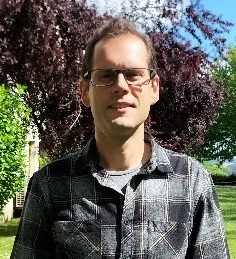
Robin Naidoo is a Senior Conservation Scientist and Lead Wildlife Scientist at WWF-USA. Biodiversity inference from environmental DNA has traditionally been obtained via metabarcoding approaches. Recent advances in sequencing technology and bioinformatic pipelines have led to suggestions that shotgun sequencing may offer significant advantages for determining the composition of taxa contained in eDNA samples. Here, he will present the results of a pilot study conducted in the southwestern United States in which water samples were collected from seeps and springs in an arid environment. Vertebrate detection sensitivity appeared low as compared to typical metabarcoding results, but low availability of water, limited sample volumes, and overall low densities of larger animal species are likely to have negatively impacted overall vertebrate detections. On the other hand, microbial community diversity and the detection of numerous plant and insect species suggests portable shotgun sequencing may offer a promising approach for consistent and rapid biodiversity characterization across the tree of life. |
 |
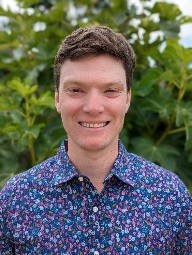
| Manuel Curto is a Senior Scientist at BOKU University (Austria), where he develops research in molecular ecology and conservation genetics. He began his career focusing on plant evolutionary biology, which was the core of his PhD at the University of Porto. During his postdoctoral work in multiple research groups at BOKU University, the Marine and Environmental Sciences Centre in Lisbon, and CIBIO, he shifted his focus toward developing analytical approaches to characterize biodiversity using molecular data, from intraspecific variation to community-level patterns, always with a strong emphasis on conservation. In this talk, Manuel will present one such approach, exploring the potential of eDNA metagenomics to describe aquatic macroorganism communities. While this method is widely used for microbiomes, its application to larger organisms is challenged by low DNA abundance and degradation, limiting assembly-based methods. Instead, short-read comparisons can lead to false positives due to limited information per read. To address this, they developed the SeqID approach, which integrates all matching signals to a given taxon to improve detection reliability. This framework enhances the potential of eDNA metagenomics to capture biodiversity across the tree of life and to infer eDNA residency times. |
 |
| Cody Aylward is Senior Connectivity Specialist for WWF-US. He earned a PhD in Ecology and Ecological Genomics from University of California, Davis, in 2022. His work at WWF integrates spatial analysis and conservation genomics to inform the design and management of wildlife corridors and landscape connectivity. Understanding genetic structure and connectivity in wide-ranging species is critical for conservation planning across transboundary landscapes, but is constrained by logistic barriers to collecting and exporting genetic material. We demonstrate a field-deployable workflow using fecal DNA and Oxford Nanopore MinION sequencing to assess genetic structure and connectivity of African savanna elephants (Loxodonta africana) across the Kavango-Zambezi Transfrontier Conservation Area (KAZA) in southern Africa. We non-invasively sampled elephants by swabbing fecal boli, then extracted and sequenced DNA in a limited-resource laboratory simulating field conditions. Using the MinION with adaptive sampling, we generated 80 ultra-low coverage whole genomes (mean = 0.70X). We calculated genotype likelihoods in ANGSD and inferred population structure with PCAngsd. We validated the approach by including a sister taxon (L. cyclotis) and a zoo-housed L. africana of known East African ancestry, both resolving as expected. Restricting the analysis to KAZA and nearby sites, we found broad connectivity within KAZA, with the notable exception of Khaudum National Park, which clustered more closely with Etosha National Park (~600 km west of KAZA) — challenging the prevailing hypothesis that the Khaudum elephant population is derived from within KAZA. Future work includes developing a SNP panel to enable multiplexed, cost-efficient sampling. |
ORGANIZATION